
The films so far.
-
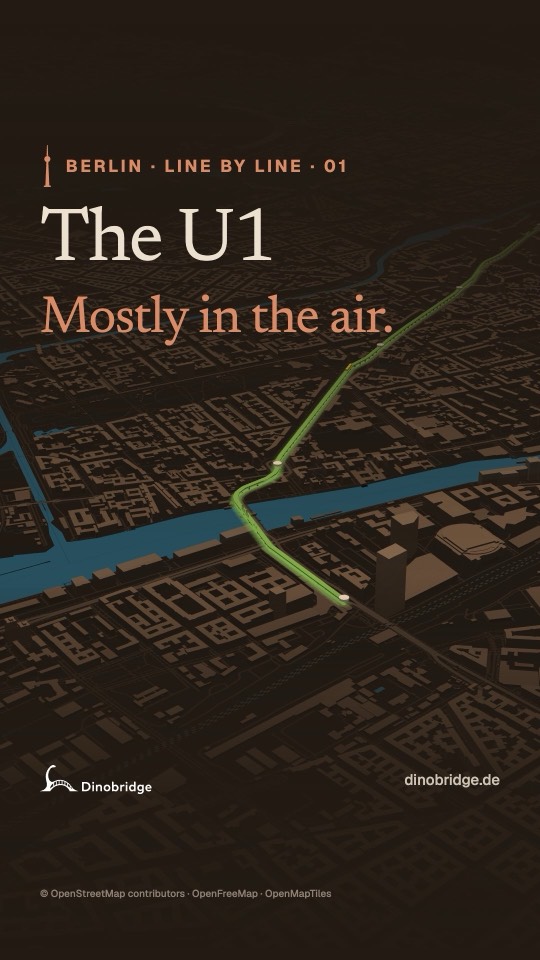 01 · 1:24 The U1: mostly in the air. Berlin’s oldest U-Bahn line barely goes underground: two thirds of its 8.8 km still run on viaducts, over the Spree on the Oberbaumbrücke and straight through a block of flats.
-
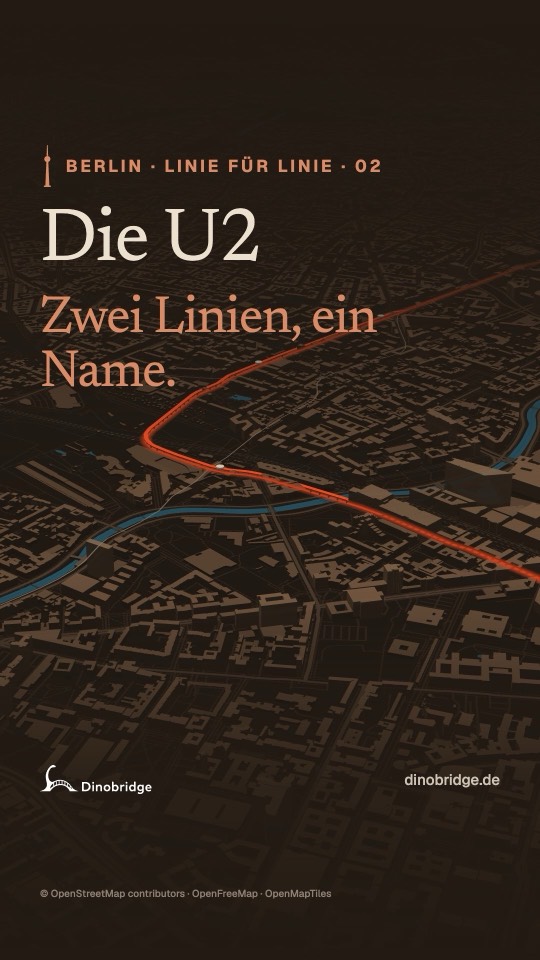 02 · 1:24 · in German The U2: two lines, one name. For three years Berlin had two U2s that did not connect; the film also passes Potsdamer Platz under the border strip, a driverless maglev on an empty viaduct and a station with five names.
-
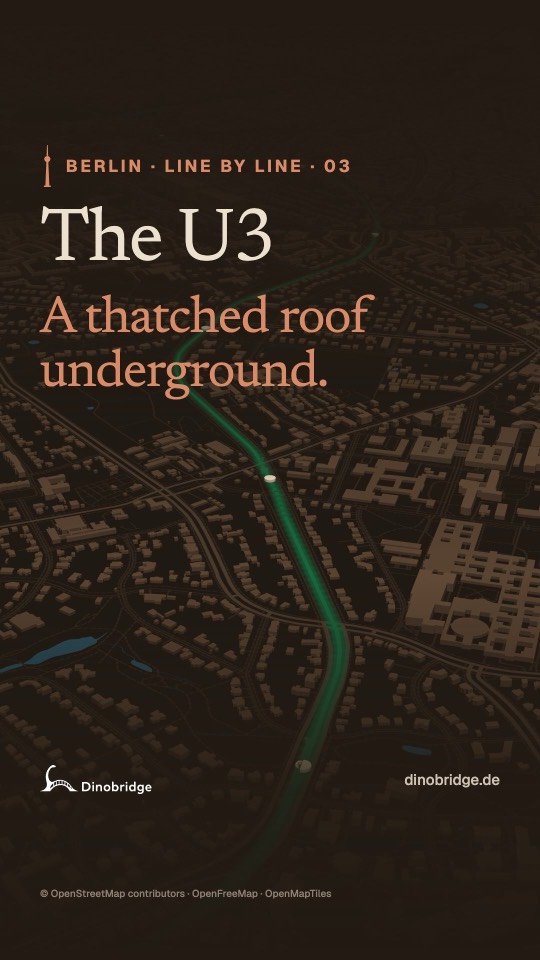 03 · 1:26 The U3: a thatched roof underground. From Krumme Lanke to Warschauer Straße: a station whose thatched roof was plastic for ten years, a 50-tonne Ice Age boulder, and a tunnel to Mexikoplatz that has waited almost a hundred years.
-
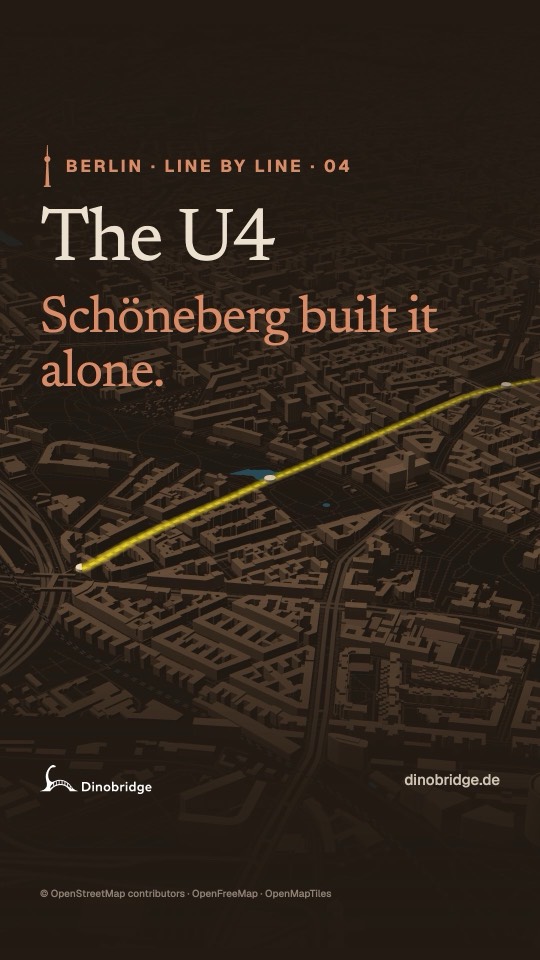 04 · 1:25 The U4: Schöneberg built it alone. In 1910 Schöneberg was a city of its own, and when the private Hochbahn said a 2.9 km line would never pay, it built Germany’s first city-owned U-Bahn itself.
-
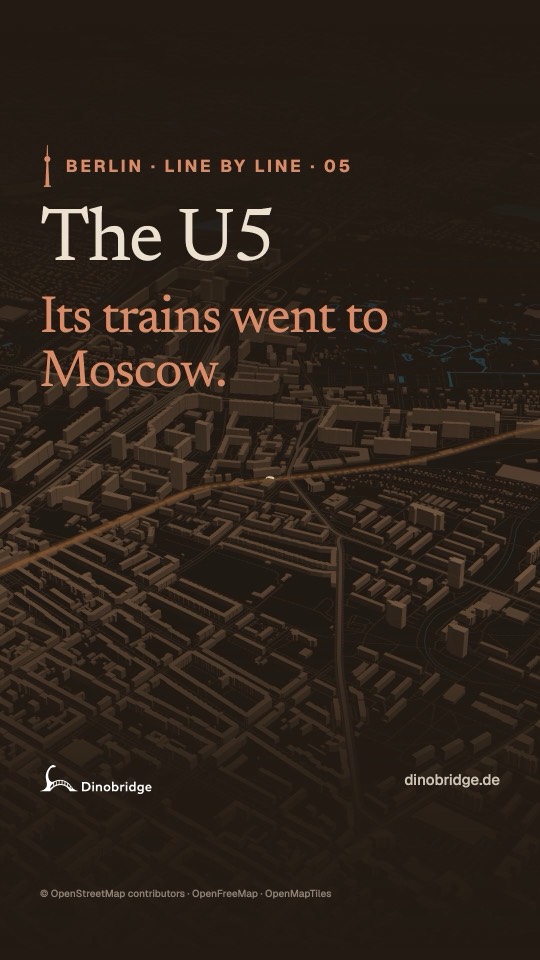 05 · 1:32 The U5: its trains went to Moscow. In 1945 the Soviets took 120 cars from the Friedrichsfelde depot to Moscow, and the line’s newest station, Museumsinsel, was dug inside frozen ground under a canal.
-
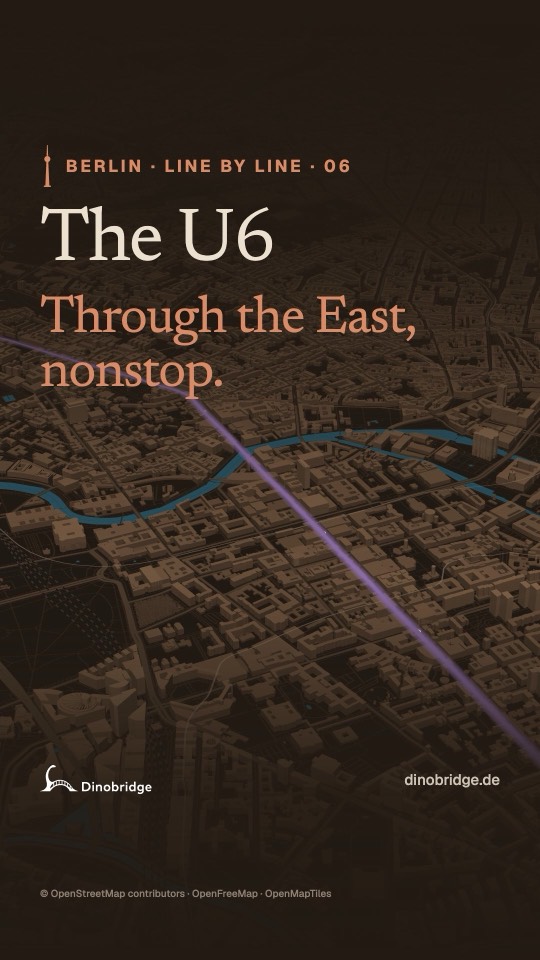 06 · 1:35 The U6: through the East, nonstop. From 1961 to 1990 West Berlin trains ran under East Berlin through five dark stations watched by armed guards, and stopped only at Friedrichstraße.
-
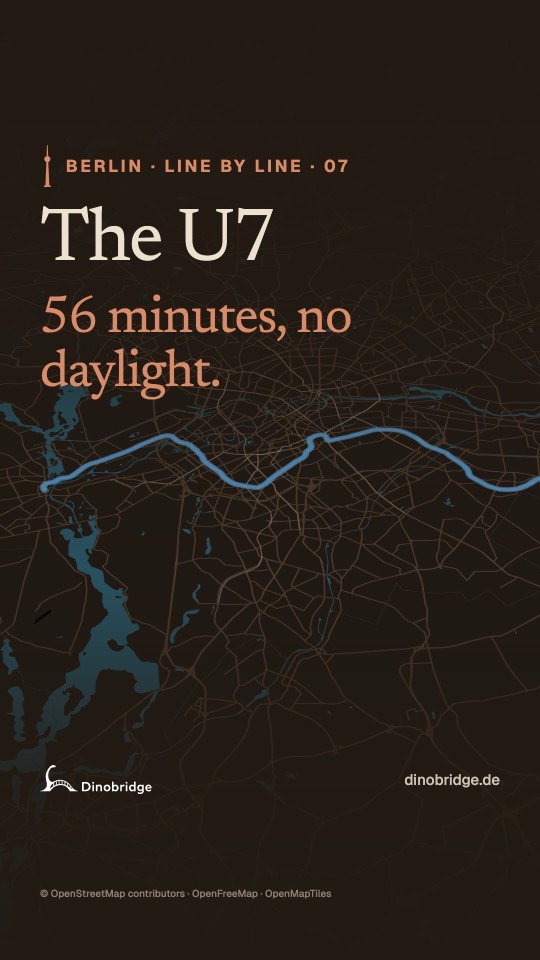 07 · 1:26 The U7: 56 minutes, no daylight. Almost 32 km from Rathaus Spandau to Rudow, all of it underground, and Berlin’s busiest U-Bahn line, with over 460,000 trips every weekday.
-
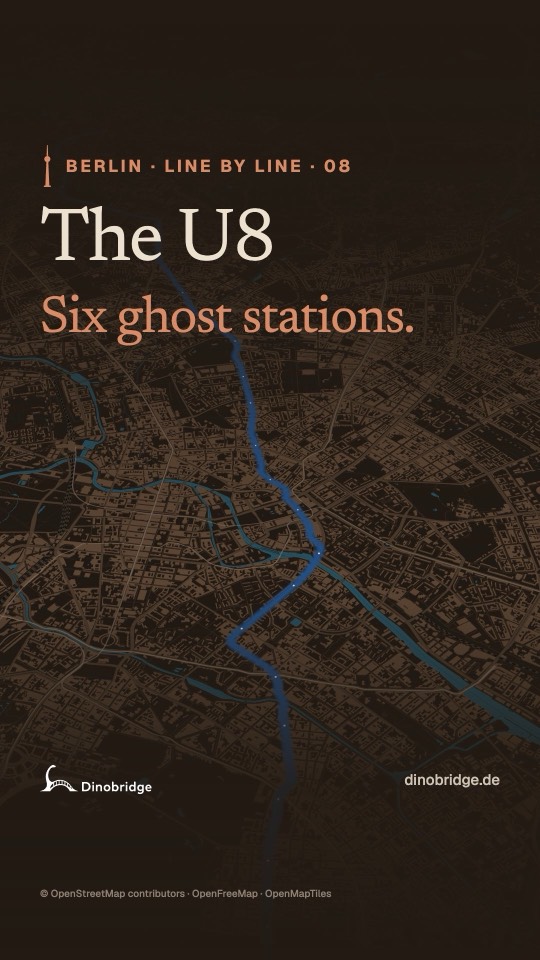 08 · 1:32 The U8: six ghost stations. For 28 years West Berlin trains rolled through six dark, guarded stations under East Berlin without stopping, and in 1980 a family escaped to Kreuzberg lying on a train’s cab floor.
-
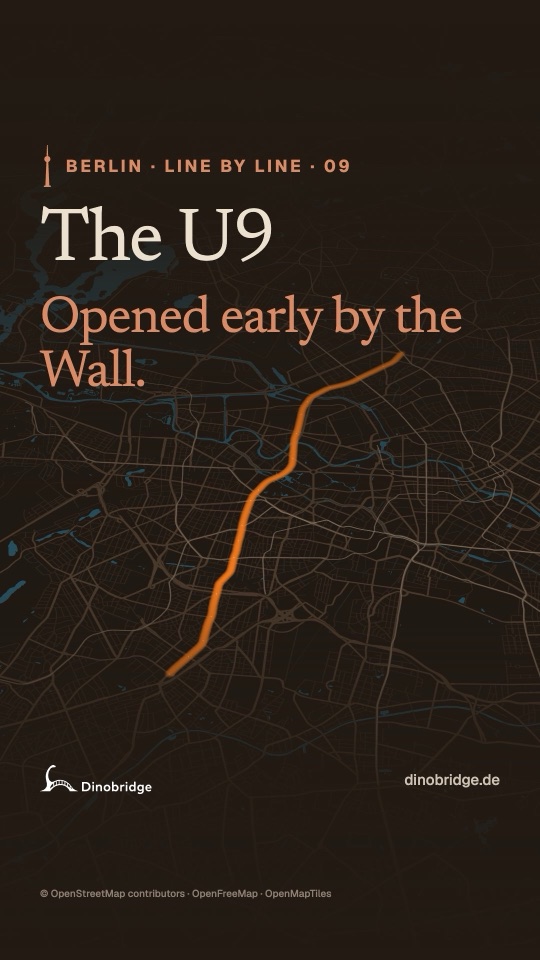 09 · 1:30 The U9: opened early by the Wall. West Berlin’s north–south line that never had to touch the East opened fifteen days after the Wall went up, and its Hansaplatz station was finished four years before the first train.
Each film opens on Instagram. Map data © OpenStreetMap contributors, OpenFreeMap, OpenMapTiles.
What we could build for you.
The same skill, pointed at your business: scattered information turned into clear answers your team can act on. Three examples from real client work.
- Asset managers Every week the investment team gets two short briefings on what the leading AI labs did and what it means for their holdings. Read the story →
- Lawyers Partner time per incoming contract down from forty minutes to about eleven. Read the story →
- Estate agents Buyers answered within minutes, and the serious ones first. Read the story →
Let’s talk about what AI could do for you.
Thirty minutes, free, no preparation. We tell you honestly where AI could change something for you, and where it would not.