The machine touches money, stock and paperwork. It does not touch the plate.
Chef-patron of a small restaurant — about 40 covers, a changing menu, six staff. He came to me because his food cost had drifted from 28% to 34% over a year and he could not say why, and because he was doing paperwork until midnight after service. He had no interest whatsoever in AI and said so in the first sentence.
After service: prep lists for tomorrow written by hand, supplier orders placed from memory, invoices in a pile, the rota rebuilt weekly in a notebook. And the thing that was actually costing him money — nobody knew what anything cost any more, because supplier prices had moved and the menu prices had not.
- Reading supplier invoices and tracking per-ingredient price over time
- Costing every dish from current prices, and recosting when a price moves
- Recalculating plate margin and food-cost percentage per dish and overall
- Scaling recipes to covers and generating the prep list from the booking count
- Building the order from par levels and current stock
- Maintaining the allergen matrix per dish, updated whenever a recipe changes
- Logging waste and showing where it concentrates, and building the rota against forecast covers
- Taste. All of it
- What goes on the menu
- What to do with a supplier who slipped
- How to lead a kitchen
- The invoice reader
- Photograph the invoice; ingredient prices update. Within six weeks he could see that three suppliers had raised prices by 9–14% without a conversation, and that one line was quietly responsible for most of the drift. This was the whole problem and it was solved by arithmetic, not intelligence.
- The live dish costing
- Every dish costed from current prices, with margin and food-cost percentage per plate updating on their own. Two dishes turned out to be losing money at the menu price. He changed one price and removed the other — he made both decisions, and neither was suggested by the software.
- The prep list
- Tonight’s bookings plus the menu plus the recipes produce tomorrow’s prep, scaled. Fifteen minutes of writing after service becomes a printout.
- The allergen matrix
- Per dish, updated automatically when a recipe changes. Legally required, error-prone, and exactly the kind of thing that goes out of date the moment a recipe changes on a Tuesday. Every entry is confirmed by him, because the consequence of a wrong allergen entry is not a bad review.
- The waste log
- Thirty seconds at close. After a month it showed him where the loss was, which was not where he thought.
No recipes, no menus, no substitutions, and no unconfirmed allergen data.
The food is the entire business. A generated dish is worthless to a chef whose reputation is his palate, and he would not have used it anyway.
The allergen rule is a hard one: the matrix is generated from his recipes but every entry is confirmed by him before it is used, and any recipe change invalidates the confirmation until he re-confirms. Cross-contamination risk is a kitchen fact that lives nowhere in a recipe file, so the machine cannot know it. It also never orders — a draft order goes to him and he sends it, because a mistakenly ordered 30kg of turbot is a real week.
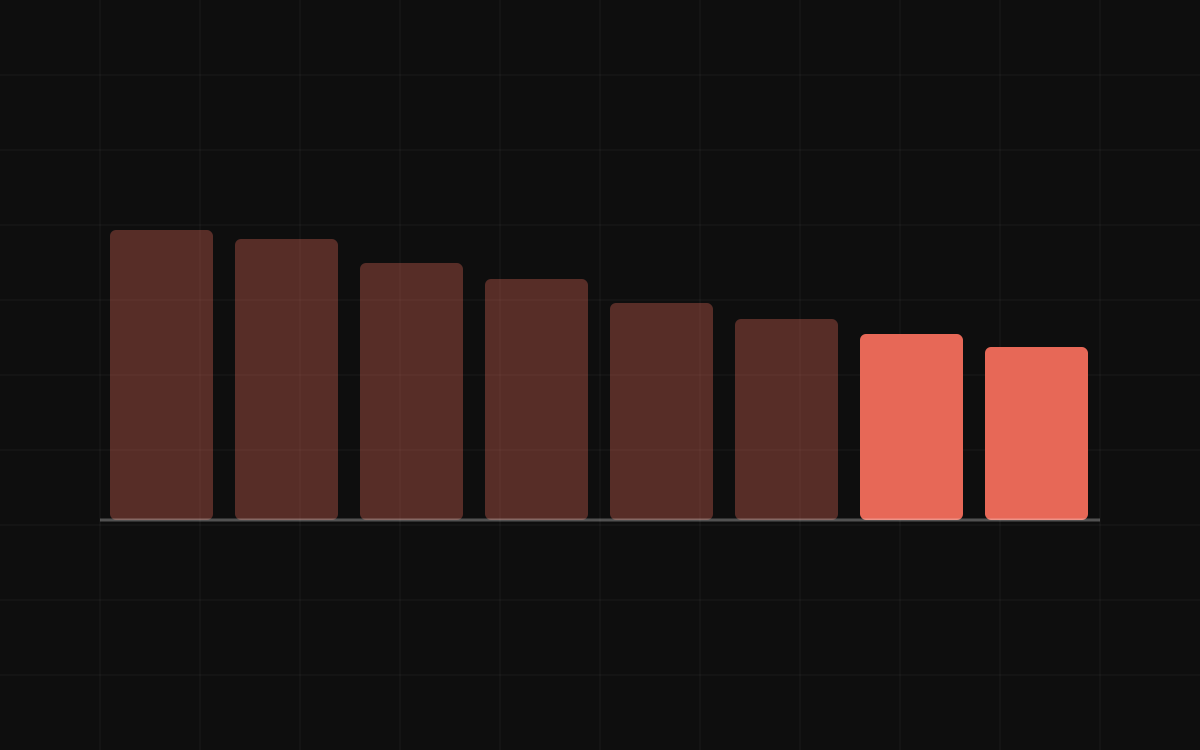
Food cost percentage — 34% back to 28.5% within a quarter, and this was almost entirely visibility. Minutes of paperwork after service, from about 70 to about 15. Waste by category. Whether the allergen matrix is current, which it now always is.
He asked, half seriously, whether it could suggest specials from surplus stock. I built the surplus list and stopped there. Which ingredients are going over is arithmetic; what to do with them is thirty years of cooking.
Photographing invoices. Thirty seconds of waste logging at close.
My food cost had gone from twenty-eight to thirty-four per cent over a year and I could not tell you why. He worked two services and did the after-service paperwork with me before he built anything. I photograph invoices now and within six weeks I could see that three suppliers had raised prices without a conversation. Two dishes were losing money at the menu price — I changed one and pulled the other, and the machine did not suggest either, it just showed me the arithmetic.
Tell me what your week looks like.
I'll tell you honestly which parts you can hand over — and which you can't.